

Film Production Services: How a Film Is Planned, Produced, and Brought to the Screen

Turning a film idea into a finished screen project requires much more than a strong story. A successful production depends on careful development, realistic planning, experienced teams, organized filming, professional post-production, and a clear path toward final delivery. This is where Film Production Services play an important role in bringing creative ideas together with the practical requirements of filmmaking.
Professional Film Production Services can also provide access to experienced production professionals, specialized equipment, creative resources, technical expertise, and established workflows. Whether the project is an independent film, feature, documentary, branded entertainment project, or another screen-based production, having the right production structure can make the entire process more efficient.
Understanding how a film moves from an initial idea to a finished screen-ready project helps filmmakers make better production decisions. The following guide explains the major stages involved and how professional production services support each step.
Film Development Begins With a Strong Creative Foundation
Every film starts with an idea, but an idea must be developed into a workable creative project before production can begin. Development establishes the story, tone, audience, format, and overall direction of the film.
During this stage, filmmakers may refine the concept, develop characters, review the screenplay, and identify the creative objectives of the project. Producers and creative professionals can evaluate whether the story is practical to produce and whether the script supports the desired production scale.
Story and concept development
Screenplay evaluation and refinement
Character and narrative development
Genre, tone, and audience positioning
Initial production scope assessment
A strong development stage reduces confusion later. It gives the production team a shared creative direction before significant resources are committed.
Planning and Pre-Production Shape the Entire Film
Pre-production is one of the most important stages in filmmaking because it transforms a creative plan into an organized production strategy. This is where schedules, budgets, locations, crews, equipment, casting, visual approaches, and logistics are carefully prepared.
Professional Film Production Services USA help coordinate these elements so the production team can enter filming with a clear understanding of what needs to happen each day. A detailed production plan also helps identify potential challenges before they become expensive problems.
Production budgeting and cost planning
Detailed shooting schedules
Location scouting and permissions
Casting and talent coordination
Crew hiring and department planning
Equipment and technical preparation
Call sheets and daily production planning
Good pre-production is not simply administrative work. It directly influences the creative quality of the film because decisions about locations, camera requirements, production design, lighting, costumes, and scheduling all affect what can ultimately be achieved on screen.
Key Pre-Production Decisions That Matter
Several decisions made before filming can have a major impact on the final production. Location availability can influence the shooting schedule, while casting choices affect character authenticity and performance. Equipment planning determines what visual techniques can realistically be achieved, and budgeting establishes the boundaries within which the creative team must operate.
For this reason, filmmakers should approach pre-production as a creative and strategic stage rather than simply a preparation period. A well-organized plan gives directors, producers, department heads, and crew members a common roadmap.
Production Turns the Plan Into Real Screen Content
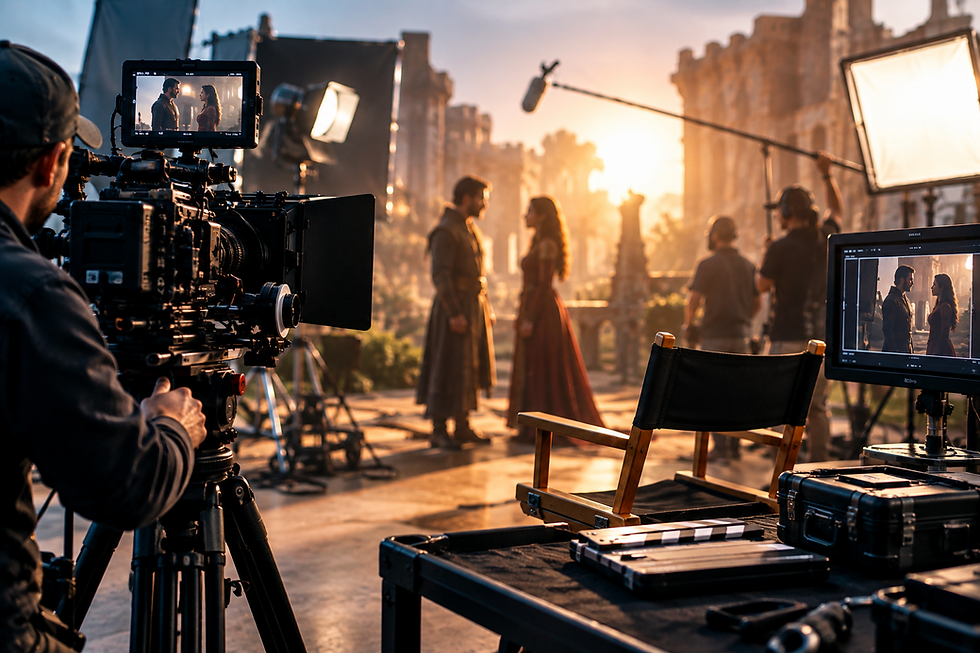
Once development and pre-production are complete, the project moves into principal photography. This is the stage where performances, locations, camera work, lighting, production design, and direction come together to create the actual footage that will eventually become the film.
The production phase requires close coordination between multiple departments. The director leads the creative execution, while producers and production managers help maintain schedules, resources, communication, and logistics. Cinematography, production design, costumes, makeup, lighting, sound, and other departments must work together to maintain continuity and achieve the planned visual style.
Professional Film Production Services can provide the structure needed to manage these moving parts efficiently. Experienced production teams understand how to balance creative requirements with practical limitations such as time, locations, crew availability, equipment, and budget.
Set and location management
Directing and cinematography coordination
Lighting and production design execution
Cast and crew management
Production sound coordination
Daily schedule and logistics management
Continuity and quality control
Filming is often where unexpected situations occur. Weather changes, location restrictions, technical issues, schedule delays, or performance adjustments can require quick decisions. An experienced production team can respond to these challenges without losing sight of the project's creative objectives.
Production Management Keeps Creative and Practical Goals Aligned
Behind every successful shoot is strong production management. While audiences primarily see the performances and visuals, production professionals are responsible for keeping the project moving efficiently behind the scenes.
Production management involves coordinating people, schedules, locations, equipment, transportation, paperwork, budgets, and communication. The goal is to make sure every department has what it needs to complete its work while protecting the overall production schedule.
Important production management responsibilities may include:
Monitoring production schedules
Managing daily crew requirements
Coordinating locations and logistics
Tracking production resources
Managing communication between departments
Responding to production changes
Maintaining workflow efficiency
Strong management is particularly important for productions with multiple locations, large crews, complex scenes, or demanding timelines.
Post-Production Transforms Footage Into a Finished Film
Filming does not create the final movie by itself. Once principal photography is complete, the project enters post-production, where the recorded material is shaped into a coherent and polished film.
Editing is usually one of the first major post-production stages. Editors review the available footage, select the strongest takes, organize scenes, establish pacing, and build the narrative structure. The editing process can reveal opportunities to improve storytelling that were not obvious during filming.
Sound is equally important. Dialogue editing, sound effects, ambience, music, and mixing help create the emotional and immersive qualities of a finished film. Color correction and color grading then establish visual consistency and help reinforce the intended mood.
Picture editing and narrative assembly
Dialogue editing and cleanup
Sound design and mixing
Music integration
Color correction and grading
Visual effects when required
Mastering and quality control
Post-production can involve multiple rounds of review and revision. Producers and directors may evaluate cuts, sound, color, pacing, and technical specifications before approving the final master.
Film Production Services Connect Multiple Stages of Filmmaking
One of the biggest advantages of working with professional Film Production Services is the ability to connect different stages of filmmaking through a coordinated workflow. Instead of treating development, pre-production, filming, and post-production as isolated activities, an experienced production partner can help ensure that decisions made in one stage support the next.
For example, the production approach established during pre-production can influence editing requirements later. Camera formats, frame rates, lighting decisions, sound recording, visual effects planning, and production design choices may all affect post-production. Thinking about the complete workflow early can prevent technical and creative problems later.
A connected production workflow can help filmmakers achieve:
Better communication between creative departments
More consistent production quality
Greater control over schedules and budgets
Fewer avoidable technical problems
More efficient post-production workflows
Clearer expectations for final deliverables
Filmmakers looking for broader production support can explore professional production services to understand how specialized production capabilities can support different stages of a creative project.
Budget, Timeline, and Quality Must Work Together
A film production must balance three closely connected factors: creative quality, available budget, and production time. Increasing the scope of one area often affects the others, which is why realistic planning is essential from the beginning.
A professional production team can help filmmakers prioritize resources according to the creative needs of the project. Not every scene requires the same level of production complexity, and thoughtful budgeting can help direct resources toward elements that have the greatest impact on the finished film.
Key areas that should be considered include:
Pre-production and development costs
Cast and crew expenses
Location and permit requirements
Camera, lighting, and technical equipment
Production design and wardrobe
Post-production and finishing costs
Contingency for unexpected expenses
Building realistic timelines is equally important. A schedule should account for preparation, shooting days, revisions, post-production, approvals, and final delivery rather than focusing only on the filming period.
Final Delivery Prepares the Film for Its Intended Audience
The final stage is about more than exporting a completed edit. A finished film may need to meet specific technical and delivery requirements depending on where and how it will be presented.
Final quality control helps identify problems with picture, sound, titles, subtitles, formatting, or other technical elements. Once approved, the film can be prepared according to the requirements of its intended platform, distributor, festival, broadcaster, or other presentation channel.
A professional final delivery workflow may include:
Final picture approval
Audio and mix verification
Color and technical quality checks
Master file creation
Required formats and versions
Subtitles or captions where applicable
Final quality-control review
This final attention to detail ensures that the creative work completed throughout production reaches the audience in the intended quality and format.
Choosing the Right Film Production Services Partner
Selecting a production partner should involve more than comparing prices. Filmmakers should evaluate experience, creative understanding, production capabilities, communication, workflow, and the ability to manage projects from planning through completion.
A production company that understands both the creative and operational sides of filmmaking can become a valuable long-term partner. You can also explore Dela Entertainment to learn more about its production capabilities and creative approach.
A Structured Workflow Brings the Film to the Screen
A finished film is the result of many connected decisions rather than one single production stage. Development establishes the foundation, pre-production creates the roadmap, filming captures the performances and visuals, post-production shapes the story, and final delivery prepares the completed project for its audience.
Understanding this complete process allows filmmakers to plan more effectively and communicate better with their production teams. Professional Film Production Services can provide the experience, organization, resources, and coordination required to move a project through these stages with greater confidence.
For filmmakers planning a new project, the goal should not simply be to complete filming. The goal is to build a reliable workflow that protects the story, supports the creative vision, manages resources responsibly, and ultimately delivers a polished finished film.
Final Thought
A strong film begins with a strong plan. If you are developing a new project and need experienced support across planning, production, and finishing, the right production partner can help turn your creative vision into a polished screen-ready film.
Contact Us to discuss your film project, production requirements, and next steps.
Frequently Asked Questions
What do Film Production Services include?
They can include development, pre-production, casting, scheduling, filming, production management, post-production, sound, color, mastering, and final delivery.
Why is pre-production important?
Pre-production establishes the budget, schedule, locations, crew, equipment, and creative plan before filming begins, reducing avoidable production problems.
Does production support continue after filming?
Yes. Depending on the provider, production support may extend into editing, sound, color grading, mastering, quality control, and final delivery.
Can Film Production Services help manage production budgets?
Yes. Film Production Services can help plan budgets, allocate resources, monitor production expenses, and manage costs throughout different stages of the project.
Can production services support independent filmmakers?
Yes. Professional production services can be structured around different project sizes, budgets, creative requirements, and production schedules.


Comments