

How Does a Professional Film Production Company Take a Project From Concept to Screen?

Turning a film idea into a finished screen project requires far more than a strong concept. A compelling story needs careful development, realistic planning, skilled production, creative direction, technical execution, and detailed post-production. A professional Film Production Company brings these moving parts together and creates a structured path from the first creative idea to the final completed film.
For filmmakers, producers, writers, and creative teams, professional production support can make the filmmaking process more organized and manageable. Instead of treating development, production, and post-production as disconnected stages, an experienced production team looks at the project as one continuous creative process. Decisions made during development can influence scheduling, casting, locations, cinematography, sound, editing, and final delivery.
Film Production Company Begins With Concept Development
A professional Film Production Company can help evaluate the project's creative foundation and determine what needs to happen before production begins. This may include refining the screenplay, establishing the tone, identifying key creative requirements, and understanding the filmmaker's objectives.
Strong development creates a foundation for the stages that follow. When the concept, story, and production goals are clearly understood, the team can make better decisions about budget, schedule, locations, cast, crew, equipment, and post-production requirements.
Reviewing and developing the core concept
Evaluating the screenplay and story structure
Defining the project's creative direction
Identifying production requirements
Establishing the intended audience and project objectives
Pre-Production Planning Builds the Roadmap
The production team coordinates numerous details, including casting, locations, crew, schedules, equipment, production design, costumes, transportation, permits, and daily shooting requirements. Each department needs to understand its responsibilities before filming begins.
A professional production company also considers how much time each scene requires and how locations, actors, equipment, and crew availability affect the shooting schedule. Efficient planning helps the production make better use of available resources without compromising creative priorities.
Finalize production schedules and shooting plans.
Coordinate cast and key crew members.
Scout and prepare suitable locations.
Arrange equipment and production resources.
Develop call sheets and daily production requirements.
Identify potential logistical challenges before filming.
How a Film Production Company Organizes Cast and Crew
A film depends on collaboration between many professionals. Directors, producers, cinematographers, production designers, sound professionals, editors, actors, and other specialists each contribute to different aspects of the project. Coordinating these roles requires clear communication and defined responsibilities.
A professional Film Production Company can help assemble the appropriate creative and technical team based on the project's scope. The goal is not simply to fill positions but to build a team that understands the project's creative direction and can work efficiently together.
Clear communication before filming helps departments anticipate their needs and understand how their work connects with other departments. This becomes particularly important when a production involves multiple locations, complex scenes, specialized equipment, or demanding schedules.
Creative Collaboration During Film Production
The director typically guides the creative vision, while producers and production teams help ensure that the project remains achievable within its available resources. Department heads translate the creative direction into practical decisions involving visuals, performances, locations, costumes, sets, sound, and other production elements.
This collaboration allows creative decisions to be made with a clear understanding of practical limitations. It also creates a more organized environment where everyone is working toward the same finished result.
Film Production Company Turns Plans Into Principal Photography
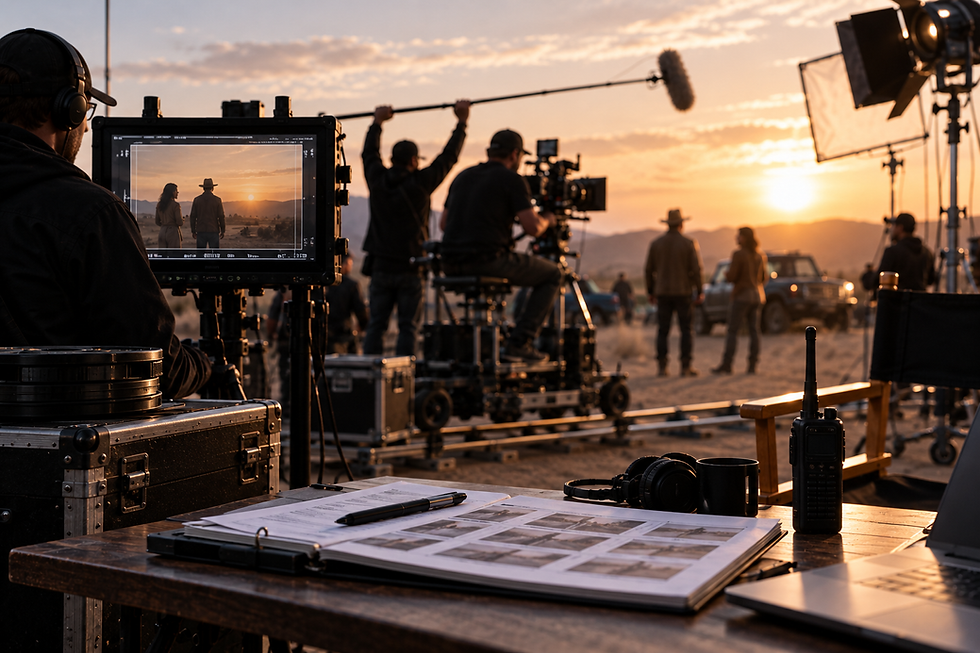
Principal photography is the stage where the planned scenes are captured. Although filming may appear to be the most visible part of filmmaking, its success depends heavily on the preparation completed beforehand.
During production, the director works with actors and department heads to capture performances and visuals that reflect the project's creative objectives. Cinematography establishes framing, lighting, camera movement, composition, and visual continuity, while production sound captures dialogue and other essential audio elements.
The production team also monitors schedules, locations, equipment, crew requirements, and unexpected challenges. A professional Film Production Company keeps the production moving while maintaining communication between creative and logistical teams.
Capture planned scenes and performances.
Maintain visual and narrative continuity.
Record clean production sound.
Monitor daily progress against the shooting schedule.
Address unexpected production challenges efficiently.
Careful management during principal photography provides the raw material needed for successful post-production. Strong footage and usable sound give editors and finishing teams greater flexibility later.
Production Management Keeps the Project on Track
Filmmaking involves constant coordination. Even a well-planned production can encounter schedule changes, weather issues, location limitations, equipment concerns, or other unexpected circumstances. Production management helps the team respond without losing sight of the project's larger objectives.
Professional production management involves monitoring schedules, resources, communication, documentation, and day-to-day requirements. Producers and production managers work to ensure that creative teams have the support they need while the project remains aligned with its established scope.
Good management also means knowing when to make practical adjustments. A production may need to reorganize a shooting day, modify a location plan, or prioritize certain scenes based on changing circumstances. Effective decision-making can protect both the schedule and the creative quality of the project.
Post-Production Shapes the Final Film
Once filming is complete, the project enters post-production. This is where recorded footage, dialogue, music, sound effects, graphics, and other elements are assembled and refined into a cohesive final experience.
Editing is usually one of the first major post-production stages. Editors review the available footage, select performances, organize scenes, control pacing, and construct the narrative. The edit can significantly influence how audiences understand characters, conflict, emotion, and story progression.
After the picture develops, additional finishing work can include color correction, color grading, sound editing, sound mixing, visual effects, titles, graphics, and final mastering. Each element needs to work together rather than being treated as an isolated technical task.
Picture editing: Builds the narrative and controls pacing.
Sound editing: Refines dialogue, ambience, and effects.
Color grading: Establishes visual consistency and mood.
Visual effects: Enhances or creates required visual elements.
Mastering: Prepares the finished project for its intended delivery.
Film Production Company Manages Creative Revisions
Most professional film projects go through multiple rounds of review and refinement. A first edit may reveal pacing concerns, unclear transitions, performance choices, or scenes that need restructuring. Revision allows the creative team to evaluate the project as a complete work rather than as individual production pieces.
A professional Film Production Company can help organize this review process and keep feedback focused. Directors, producers, editors, and other key stakeholders may review cuts and identify changes that strengthen the final project.
Effective revisions are not necessarily about making the film longer or adding more material. Sometimes the strongest improvement comes from removing unnecessary scenes, tightening dialogue, changing the order of sequences, adjusting pacing, or refining a character's emotional progression.
Quality Control and Final Film Delivery
Completing the creative edit does not automatically mean the project is ready for delivery. Before a film is finalized, the production team needs to review the completed project carefully and confirm that both creative and technical elements meet the required standards.
Quality control may include checking picture continuity, dialogue clarity, audio balance, color consistency, graphics, titles, credits, synchronization, and technical specifications. Any issues identified during this stage can be corrected before final delivery.
Delivery requirements vary depending on how and where the film will be presented. A professional production team considers the required file formats, audio configurations, subtitles, captions, artwork, and other project-specific assets.
Benefits of Working With a Professional Film Production Company
Working with an experienced production company provides filmmakers with access to specialized knowledge across multiple stages of the filmmaking process. Instead of coordinating every department independently, filmmakers can work with a team that understands how creative, technical, and logistical decisions connect.
Structured workflow: Each production stage follows an organized process.
Professional expertise: Specialized teams contribute knowledge across development and production.
Better resource management: Budgets, schedules, locations, equipment, and personnel can be coordinated efficiently.
Creative consistency: The production team works toward a unified creative vision.
Post-production support: Editing and finishing can be managed as part of the overall workflow.
Reduced production pressure: Professional coordination allows filmmakers to focus more closely on creative decisions.
For a broader look at professional production support, explore Film Production Service. You can also learn more about the film services available through Dela Entertainment.
10. Choosing the Right Film Production Company for Your Project
The right production partner should match the creative needs, scale, schedule, and goals of your project. Reviewing previous work is a useful starting point, but filmmakers should also understand how a company approaches communication, planning, production management, and post-production.
Look for a production company that can explain its process clearly and demonstrate relevant experience. A strong partner should be able to discuss the project's creative objectives while also providing practical guidance about schedules, resources, production requirements, and finishing.
Review relevant production experience and previous projects.
Discuss your creative vision and expected deliverables.
Ask about the development and pre-production workflow.
Clarify production schedules and resource requirements.
Understand the post-production and revision process.
Confirm communication and project management procedures.
For additional guidance on evaluating professional production partners, read this Film Production Companies.
Take the Next Step With Your Film Project
Your concept deserves a production process that protects its creative vision from development through final delivery. If you are ready to discuss your film project, production requirements, or next creative step, contact Dela Entertainment to discuss your project.
Final Thoughts
A professional Film Production Company helps connect these stages into one organized workflow. From developing the original concept and preparing the production plan to managing principal photography, coordinating post-production, refining the final cut, and preparing delivery assets, the right production partner can help turn an ambitious idea into a completed screen project.
The strongest productions balance creative vision with practical execution. When filmmakers work with experienced professionals who understand both sides of that equation, they gain a structured environment for making creative decisions while keeping the project moving toward its final goal.
To explore more about Dela Entertainment and its filmmaking capabilities, visit Dela Entertainment.
FAQ - Film Production Company
What does a Film Production Company do?
A Film Production Company can support development, pre-production, filming, production management, post-production, finishing, and final delivery.
What happens before filming begins?
Pre-production typically includes planning the screenplay, casting, locations, crew, schedule, equipment, logistics, and other production requirements.
Why is pre-production important?
Thorough pre-production helps organize resources, identify challenges, establish schedules, and prepare the creative and technical teams for filming.
How long does film production take?
The timeline varies according to the project's length, complexity, locations, schedule, post-production requirements, and number of revisions.
How should I choose a Film Production Company?
Review relevant experience, previous work, production capabilities, workflow, communication, scheduling, and post-production support before making a decision.


Comments